Atomic Habits
by James Clear
Learn how tiny 1% improvements compound into life-changing results. Forget massive goals and build powerful systems through small daily habits that create extraordinary transformations.
Key Ideas
Ambition alone is insufficient
Ambition alone is insufficient because winners and losers often share the same goals; it is the quality of the daily system that determines the winner.
Lasting change occurs only when a
Lasting change occurs only when a behavior is tied to a person's self-conception, where every action acts as a 'vote' for the type of person they wish to become.
To create good habits
To create good habits, make them obvious, attractive, easy, and satisfying; to break bad habits, do the inverse.
We are often the product of our surroundings
We are often the product of our surroundings, meaning that designing a space for better choice architecture reduces the need for exhausting willpower.
A habit must be established through
A habit must be established through the 'Two-Minute Rule' and consistent appearance before it can be improved upon for elite performance.
Summary
Why it matters: Forget about goals and focus on the systems that create them
Goals vs. Systems: Why Small Changes Win
Most people obsess over ambitious goals but ignore the daily systems that actually create results. The British Cycling team exemplified this shift—after a century of mediocrity, they stopped chasing gold medals and focused on "marginal gains," making 1% improvements in everything from equipment to hygiene. By stacking these tiny "atomic" changes, they built a system that eventually dominated the sport. Your current life is simply a lagging measure of your past habits, not your goals.
The Plateau Problem and Compound Growth
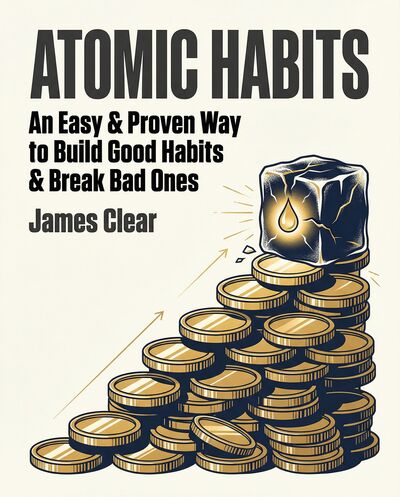
Progress isn't linear, and most people quit during the "Plateau of Latent Potential"—the frustrating period where effort seems wasted. Like heating an ice cube that doesn't melt until exactly 32 degrees, your work is being stored, not wasted. You don't rise to the level of your goals; you fall to the level of your systems. Getting 1% better daily leads to remarkable compound results, but only if you focus on the small building blocks that make up your day rather than the distant finish line.
True behavior change is identity change because you become what you repeat
True behavior change requires shifting focus from outcomes to identity. Most people try to change results without changing who they believe themselves to be, which leads to temporary progress that eventually reverts. The difference between "I'm trying to quit smoking" and "I'm not a smoker" illustrates how identity-aligned behavior feels natural rather than forced through willpower.
Identity change works like a democratic process—every action is a vote for the type of person you want to become. Making your bed votes for being organized; writing one paragraph votes for being a writer. You don't need perfection, just enough small wins to build evidence that supports your new identity. This creates a two-step transformation: first decide who you want to be, then prove it through consistent small actions.
When habits align with identity, they become much easier to maintain because you're not forcing difficult behaviors—you're simply acting according to who you are. Instead of setting a goal to run a marathon, you become someone who never misses workouts. This approach makes habits stick because quitting something that's part of your persona is much harder than abandoning items on a to-do list.
Building new habits requires hard-to-miss cues and a specific plan of action
Building new habits fails when we rely on vague intentions like "be healthier" instead of creating specific, actionable plans. Your brain responds to environmental cues before you're consciously aware of them, so success depends on making good cues obvious and bad ones invisible. Research shows that people who create implementation intentions—stating exactly what they'll do, when, and where—achieve 91% success rates compared to just 38% for those relying on motivation alone.
The most effective strategy combines specific planning with habit stacking, where you anchor new behaviors to existing routines using the formula "After [CURRENT HABIT], I will [NEW HABIT]." Your environment acts as an invisible hand guiding behavior, so design your space for success by placing visual cues for good habits in plain sight. When a hospital moved water bottles to visible locations near food stations, water sales increased dramatically without any promotional messaging, proving that obvious cues drive behavior change more effectively than willpower.
Temptation bundling and social circles make difficult habits much more attractive
Temptation Bundling and Social Influence Make Habits Attractive
Your brain craves anticipation more than reward itself—100% of reward centers activate when expecting something versus only 10% when experiencing it. To make difficult habits stick, use temptation bundling: pair something you need to do with something you want to do. For example, an engineering student only allowed Netflix to play while pedaling his stationary bike at a certain speed. You can apply this by only listening to favorite podcasts while doing chores or enjoying luxury coffee while answering emails.
Social circles powerfully shape your habits through evolutionary drives to fit in. Your obesity risk increases 50% if a close friend is obese because we absorb behaviors from those around us. Join groups where your desired behavior is normal—book clubs for reading, running groups for fitness. When the habit becomes a way to belong rather than a personal struggle, it transforms from work into socializing. Additionally, reframe your internal dialogue from "have to" to "get to" (building strength instead of forced exercise) to make habits feel like opportunities rather than burdens.
Mastering the two-minute rule ensures you always show up on difficult days
The Two-Minute Rule states that when starting a new habit, it should take less than two minutes to complete. Instead of "run three miles," start with "put on running shoes." Instead of "read for 30 minutes," begin with "read one page." This approach works because your brain naturally follows the path of least resistance, and most people fail not because they lack motivation, but because they make habits too difficult from the start. The key insight is focusing on the entry point rather than the finish line—you can't optimize a habit that doesn't exist.
The rule works by establishing the ritual of showing up consistently before worrying about performance or results. One man lost over 100 pounds by committing to go to the gym but only staying for five minutes maximum. This taught him to master the art of showing up, which became the foundation for bigger changes. You can support this by "priming" your environment—removing small obstacles and setting up your space to make good habits the easiest choice available.
The Two-Minute Rule removes the pressure of being heroic every day and works with your natural tendencies instead of against them. Once you've started, momentum often carries you forward, but even if it doesn't, you've still succeeded at showing up. This builds identity and creates the gateway behavior that sets the trajectory for the rest of your day.
Immediate rewards and tracking mechanisms lock in the repetition of your habits
Immediate rewards are crucial for habit formation because our brains prioritize present benefits over future ones. The Cardinal Rule of Behavior Change states that rewarded behaviors are repeated while punished ones are avoided. To make good habits stick, create immediate satisfaction - like transferring money to a vacation fund each time you cook at home instead of eating out, or using visual tracking systems that provide instant gratification when you mark progress.
Habit tracking transforms invisible progress into tangible wins and creates momentum through visual proof of consistency. Simple systems like moving paperclips after each task or marking X's on a calendar tap into our brain's love of completion and accomplishment. When you inevitably miss a day, follow the "never miss twice" rule - one mistake is an accident, but two starts a new (bad) habit. For breaking bad habits, make them immediately painful through accountability systems like habit contracts with social or financial penalties that create real-time consequences for poor choices.
Sustained high performance requires balancing daily consistency with the right level of challenge
The biggest threat to long-term success isn't failure—it's boredom. Elite performers aren't superhuman; they're simply better at managing repetitive work. The Goldilocks Rule explains optimal motivation: we perform best when tackling challenges just at the edge of our current ability. Too easy leads to boredom, too hard leads to frustration and quitting.
The key difference between amateurs and professionals lies in consistency during mundane moments. Amateurs wait for inspiration and let distractions derail them, while professionals stick to their schedule regardless of how they feel. To reach mastery, you must fall in love with the plateau—the repetitive daily work that compounds into significant results over time.
Sustainable growth requires pairing automatic habits with deliberate practice. Once a habit becomes easy, use that freed mental energy to push yourself about 4% further. This prevents settling into a "good enough" plateau while maintaining the balance between consistency and challenge. Small shifts in daily consistency, like a plane's course adjustment, determine your ultimate destination.
Immediate satisfaction is the glue of consistency
Our brains evolved to seek immediate rewards for survival, but good habits often take years to pay off. The Cardinal Rule of Behavior Change states that immediately rewarded actions get repeated. To stick with positive habits, you need to create artificial wins that provide instant satisfaction while waiting for long-term results to compound.
The "Paper Clip Strategy" demonstrates this principle - moving a paper clip between jars after each sales call creates an immediate, tangible reward. Habit tracking works similarly by letting you "never break the chain," turning your streak into a satisfying visual legacy. For bad habits, use a "Habit Contract" with accountability partners who impose immediate social or financial penalties when you fail, making the short-term cost of bad behavior outweigh its temporary pleasure.
Elite performance requires balancing habits with deliberate reflection
Elite performance requires more than just automated habits. Once habits become second nature, they can lead to complacency rather than improvement. To reach mastery, you must combine consistent habits with deliberate practice and choose environments that align with your natural strengths, like Michael Phelps in swimming.
The Goldilocks Rule keeps you motivated by working on tasks that are challenging but manageable—about 4% beyond your current ability. To prevent habits from becoming performance ceilings, implement regular reflection and review systems. Pat Riley's "Career Best Effort" program exemplifies this by tracking overlooked contributions to maintain team sharpness. This approach ensures habits serve as a foundation for growth rather than a limit on your potential.
Read the full summary of Atomic Habits on InShort
Open in App